


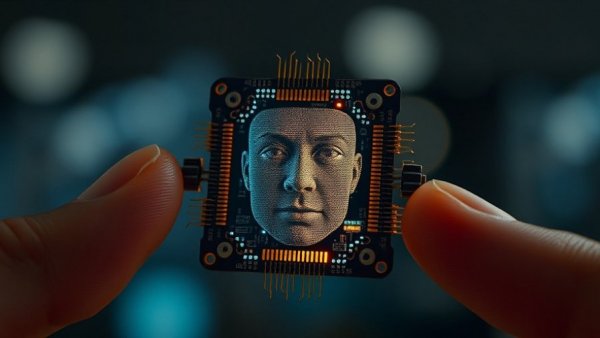
Understanding the Rise of Digital Twins in Business
In a world where companies are increasingly leveraging advanced technologies, the concept of a digital twin—a synthetic version of a real person created through the analysis of data—has sparked significant interest and concern among business owners. This innovative approach combines artificial intelligence (AI) with real-time behavioral data to create profiles that can emulate consumer behavior without their direct participation.
In 'Companies Are Building a Second You (Seriously)', the discussion dives into the implications of creating digital twins for businesses, exploring key insights that sparked deeper analysis on our end.
Synthesizing Consumer Behavior: A New Era for Market Research
Most companies have relied on traditional research methods, such as focus groups and surveys, to understand consumer behavior. These methods often provided incomplete and sometimes misleading insights. However, digital twins can offer a more nuanced understanding of customer preferences by simulating responses based on collected behavioral data. Each digital twin is formed from a vast array of consumer interactions—purchases, clicks, and past survey responses—allowing AI to predict how they may respond in various situations.
The Unseen Benefits for Business Owners
For business owners, digital twins present a double-edged sword. On one hand, they offer the promise of greater efficiency. For instance, a business could test numerous variations of marketing messages with a synthetic audience before committing resources to real-world campaigns. This reduces costs associated with human subjects while speeding up the decision-making process.
Furthermore, companies can utilize these models not only to eliminate ineffective marketing options quickly but also to identify the most persuasive approach for specific demographics, leading to potentially higher conversion rates.
Ethical Considerations: The Risks Behind the Algorithms
While the use of digital twins provides clear advantages, it also raises ethical concerns. The line between personalization and manipulation is thin, and there exists a threat that companies might inadvertently reinforce negative stereotypes by relying on incomplete data. A digital twin doesn’t just replicate a person’s history; it can also misrepresent them based on assumptions drawn from that data. This scenario could lead to missed opportunities for genuine engagement with consumers.
Understanding the Mechanism: How it Works
The process of creating a digital twin involves collecting extensive data and then utilizing AI models to generate predictive responses. A recent study illustrated the power of this method, where researchers successfully created synthetic models that generated millions of responses and demonstrated a 78.8% accuracy compared to human responses. However, accuracy doesn't mean fidelity; the synthetic versions do not perfectly embody their real-life counterparts, which presents both a potential benefit and a significant limit.
Future Signals: What Lies Ahead
As businesses continue to explore this frontier, the role of digital twins will likely expand. They could become essential in strategic decisions, influencing everything from product launches to service optimizations. However, the challenge lies in integrating human elements with algorithmic predictions in a way that maintains ethical standards and fosters a true connection with customers.
How to Prepare for the Digital Twin Revolution
Business owners must stay informed about the challenges and advantages of adopting digital twin technology. Investing in robust data governance practices will be essential to harness the potential of AI while ensuring ethical considerations remain at the forefront. Also, fostering transparency with customers regarding data usage will help build trust, ensuring that the implementation of digital twins does not alienate the very consumers they aim to serve.
The journey into utilizing digital twins is not just about innovation; it’s about ensuring businesses use technology responsibly to enhance human connections, not replace them. As the digital landscape continues to evolve, understanding these advancements will better equip business owners to navigate the complexities of a tech-driven economy.






Write A Comment